How to Use Procrastination to Get Stuff Done
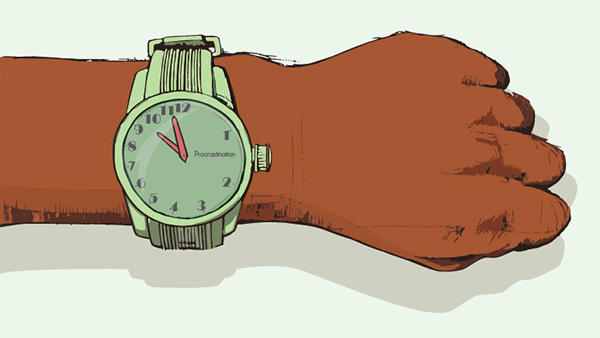
". . . anyone can do any amount of work, provided it isn't the work he is supposed to be doing at that moment." - Robert Benchley
I already wrote about procrastination last week, so my inner ongoing battles should slowly come apparent to you :-)
Anyhow, Procrastinators seldom do absolutely nothing, they get their email inbox to zero, clean up the house, reorganize their desktop, read articles on how to take better notes, read books, the list goes on. Why does the procrastinator do these things? Because they are a way of not doing something more important.
And that's where structured procrastination comes in. The term structured procrastination was coined (and put into writing) first by John Perry who also wrote the book The Art of Procrastination. He defines it as:
"...shaping the structure of the tasks one has to do in a way that exploits the fact that we can be motivated to do difficult, timely and important tasks, as long as these tasks are a way of not doing something important".
The steps involved are simple and you might already do those:
- Order your list of tasks by importance.
- Tasks that seem most urgent and important are on top
But now comes the important part straight from John Perry:
There are also worthwhile tasks to perform lower down on the list. Doing these tasks becomes a way of not doing the things higher up on the list. With this sort of appropriate task structure, the procrastinator becomes a useful citizen. Indeed, the procrastinator can even acquire, as I have, a reputation for getting a lot done.
If you are anything like me, you try to minimize your commmitments, assuming that if I have only a few things to do, I will quit procrastinating because now there is nothing else left than the most important task. But instead of clarity I receive paralysis.
BUT as Perry points out correctly, this goes contrary to the nature of a procrastinator and destroys his or her most potent source of motivation. Because now we only have the most important tasks on the list and the only way to avoid them is to do nothing aka nonsense.
And now obviously the most important question:
"How about the important tasks at the top of the list, that one never does?"
John answers this for us:
The trick is to pick the right sorts of projects for the top of the list. The ideal sorts of things have two characteristics, First, they seem to have clear deadlines (but really don't). Second, they seem awfully important (but really aren't). Luckily, life abounds with such tasks.
This actually happens even with this newsletter. Every week I think for myself, "well this week I should actually start doing the outline on Wednesday and then on Thursday I work on it, so that on Friday I only have to put on the finishing touches and send it out". Of course this has never happened. Instead I am sitting here at 5:20pm, writing these last words before going to a dinner with friends.
So what happend here was, I had this "urgent", "important" task with a "deadline" on my task list all week, procrastinated on it all week, but got a shit-ton done while pushing this task away. And then towards the end of the week another important client project task came on and now all of a sudden the newsletter is the task that looks more desirable then putting together that client presentation. And the latter gets pushed out until another "important" task takes its place.
The observant reader may feel at this point that structured procrastination requires a certain amount of self-deception, since one is in effect constantly perpetrating a pyramid scheme on oneself. Exactly. One needs to be able to recognize and commit oneself to tasks with inflated importance and unreal deadlines, while making oneself feel that they are important and urgent. This is not a problem, because virtually all procrastinators have excellent self-deceptive skills also.
And Perry alleviates our guilt:
...what could be more noble than using one character flaw to offset the bad effects of another?