Polymaths - Who they are and how you can become one
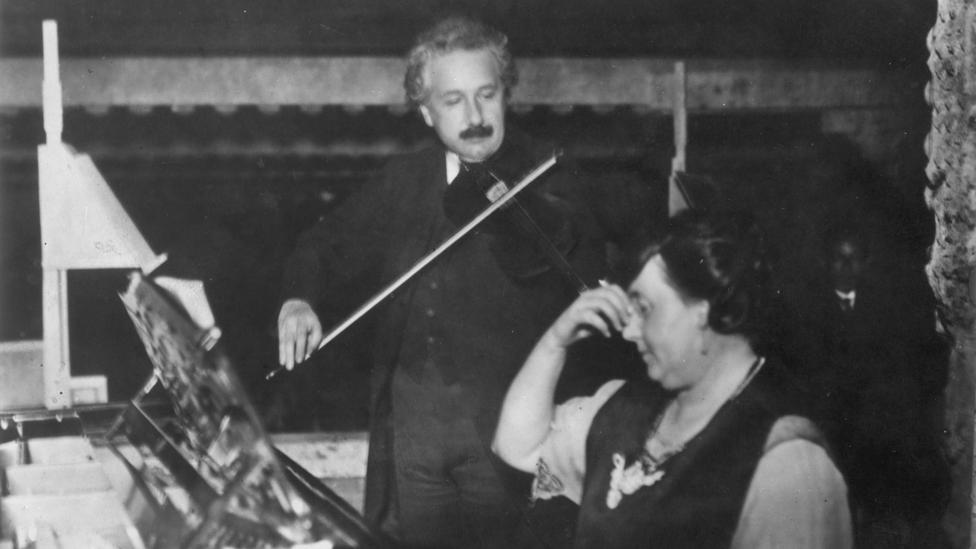
There have always been those seemingly impossibly talented people who accomplish a staggering amount of feats during their lifetimes in several unrelated fields at once. Leonardo Da Vinci, Benjamin Franklin, Marie Curie and more recently Elon Musk are just some of them.
We call them Polymaths.
In his recent article, David Robson from BBC, explores what makes a polymath and what we can learn from the history's greats to live a more polymathic life ourselves.
Definition of a Polymath
The term has its origins in Greek and loosely translates into "a person with many learnings". However, the exact definition of how advanced those learnings in a certain field need to be or how many disciplines are required, is a topic of much debate.
In his book "The Polymaths", Waqas Ahmed eludes:
When examining the lives of historical polymaths, you may only consider those who had made significant contributions to at least three fields, such as Leonardo da Vinci (the artist, inventor and anatomist), Johann Wolfgang von Goethe (the great writer who also studied botany, physics and mineralogy) and Florence Nightingale (who, besides founding modern nursing, was also an accomplished statistician and theologian).
Traits of a polymath
While researching the greatest of history's polymaths, Waqas found a few traits that were pretty common among the bunch:
- Higher-than-average intelligence (facilitates and catalyses learning)
- Open-mindedness
- Curiousity
- Self-reliance and individualism
- Driven by a great desire for personal fulfilment
- Metacognition (thinking and evaluating ones thinking)
Angela Cotellessa interviewed hundreds of modern polymaths about their experiences and found an interesting thread:
Many children are fascinated by many different areas – but our schools, universities and then employment tend to push us towards ever greater specialisation. So many more people may have the capacity to be polymaths, if only they are encouraged in the right way.
So she found that indeed, there is one more trait that is crucial in todays world:
High emotional resilience.
Angela argues that those with lower "self-awareness" and more importantly "self-posession", lack the means to fight the norms that are forced upon us by society and hence are more likely to specialize.
Specialization vs. Cross-Pollination
As David Robson rightly points out: "There are, of course, some good reasons why we might be hesitant to pursue multiple interests. One is the fear that we might spread ourselves too thinly if we devote ourselves to more than one avocation. With a divided attention, we would fail to achieve success in any domain – the idea that the “Jack of all trades is the master of none”.
But he also argues that there is a magical thing call "cross-pollination" happening once we start exploring new fields outside of our main expertise. Meaning, ideas of one field "pollinate" and serve to inspire innovations in the other.
He goes on:
The benefits of cross-pollination becomes evident in the talents of someone like Leonardo da Vinci – whose knowledge of anatomy, mathematics and geometry improved the precision of his paintings, and whose visual imagination fuelled his creativity in mechanical engineering. “These things fed off one another.”
Polymathy is the optimal path to creativity because, by its very nature, it requires you to be diverse in your experience and your learning. And this applies to once-in-a-lifetime geniuses, as well as the average Joe like you and me.
The benefits of living a more polymathic life
Most of us may never reach the heights of the juggernauts highlighted in this article. So why would we even want to become more polymathic?
According to David Robson, new research shows, that pursuing and reaching a certain expertise in multiple fields is strongly correlated with:
- Increased life satisfaction
- Increased work productivity
- Increased overall creativity and problem solving skills
And there is another benefit to switching between different subjects:
Studies of students in many different disciplines – from academia to sport and music – have shown that, after a certain amount of practice or study, we stop learning so efficiently. We can therefore make better use of our time if we regularly switch between skills or subjects. The same goes for studies of problem solving – you will find more solutions to a task if you return to it after looking at something completely different, rather than simply spending ever more time on the same question.
So how can you nurture your inner polymath?
- Don't be afraid to read about new topics that interest you. You might just find concepts and ideas that you can use in your current field of specialization.
- Take free online university courses on topics that interest you. MIT, Stanford, ETH and many more of the worlds best universities offer classes on Thermodynamics, Economic theory of trade, Roman history, and Stoic philosophy.
- Pick up that hobby you wanted to start a long time ago. Whether that's a new sport, an instrument or an art form like painting, dancing or acting.